Dallas Museum of Art
A catalyst for community creativity, engaging people of all ages and backgrounds with a diverse spectrum of programming, from exhibitions and lectures to dramatic performances.
00
problem
Visitors often struggle to navigate large, crowded museums, especially when maps are unclear or difficult to access. Printed maps are available on-site, but some visitors skip them or prefer to plan their visit ahead of time. While museums attempt to solve this by publishing maps online, these are typically static PDFs that are hard to read, difficult to navigate, and poorly optimized for mobile devices, creating friction before and during the visit.
solution
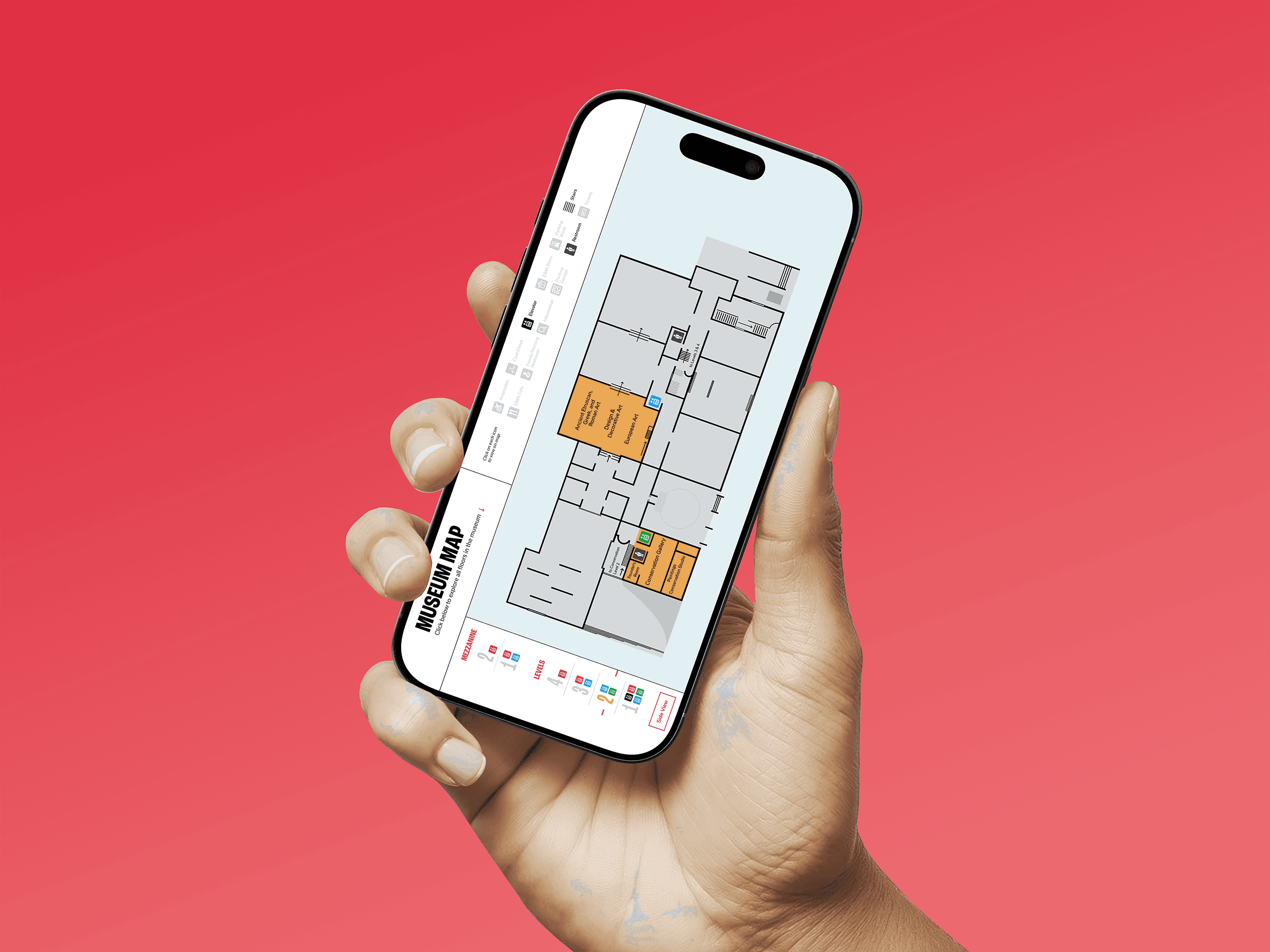
To address the challenges of navigating a large, multi-floor museum, I collaborated with DMA to transform their static PDF map into an interactive, mobile-optimized experience. Designed to be accessible before and during a visit, the map consolidates floors, amenities, and exhibitions into a single, intuitive interface. This approach helps visitors understand where they are, discover what’s on view, and move confidently between floors, reducing confusion and improving the overall museum experience.
DMA’s interactive map was driven by a vision of improved accessibility and interactivity. Their existing map–a static PDF displaying all floors at once–often felt overwhelming for visitors, highlighting the need for a more modern, user-friendly solution. In collaboration with DMA’s creative team and my team at Ceros, we brought this vision to life by reimagining the map as an intuitive, interactive experience.
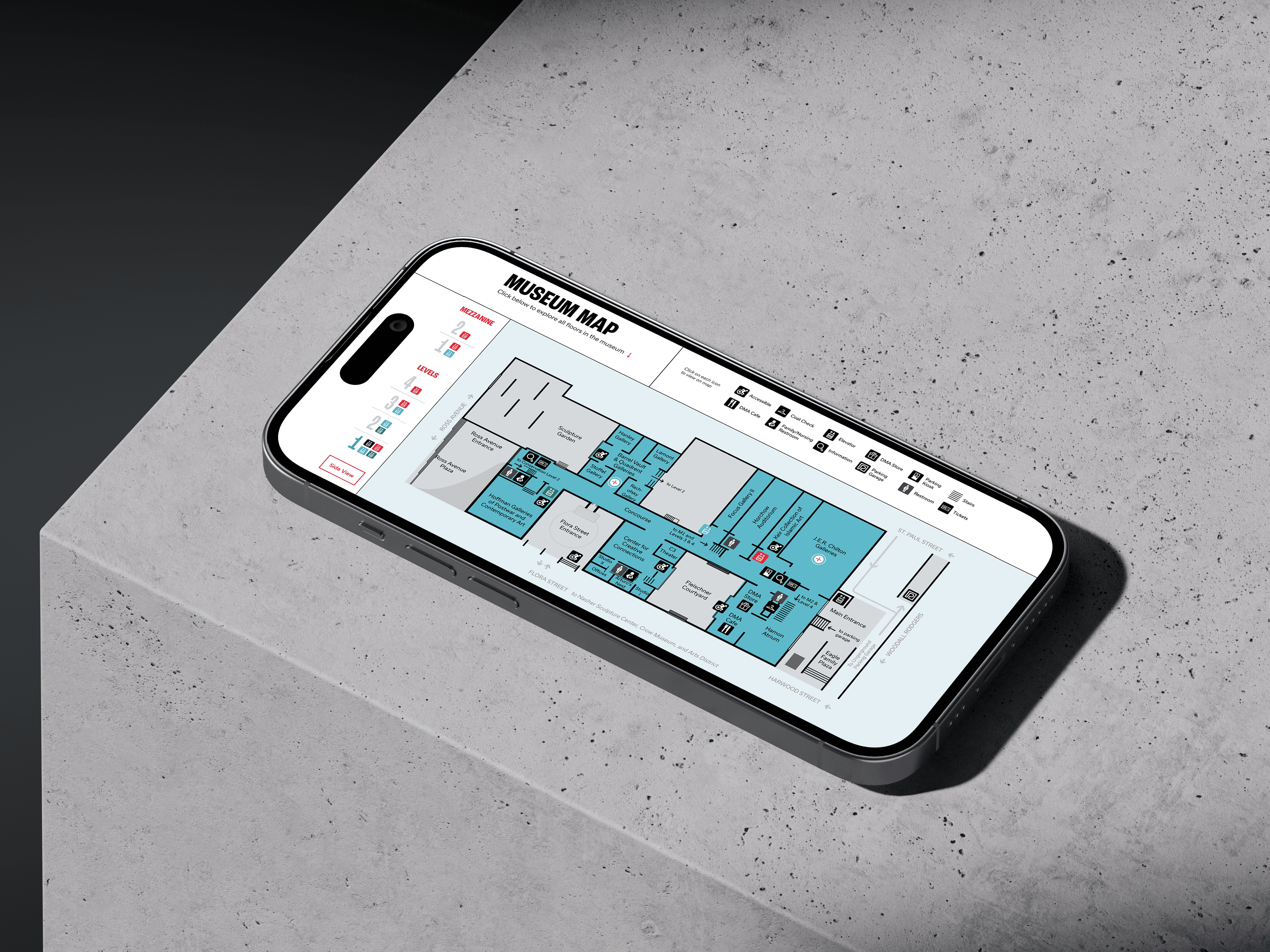
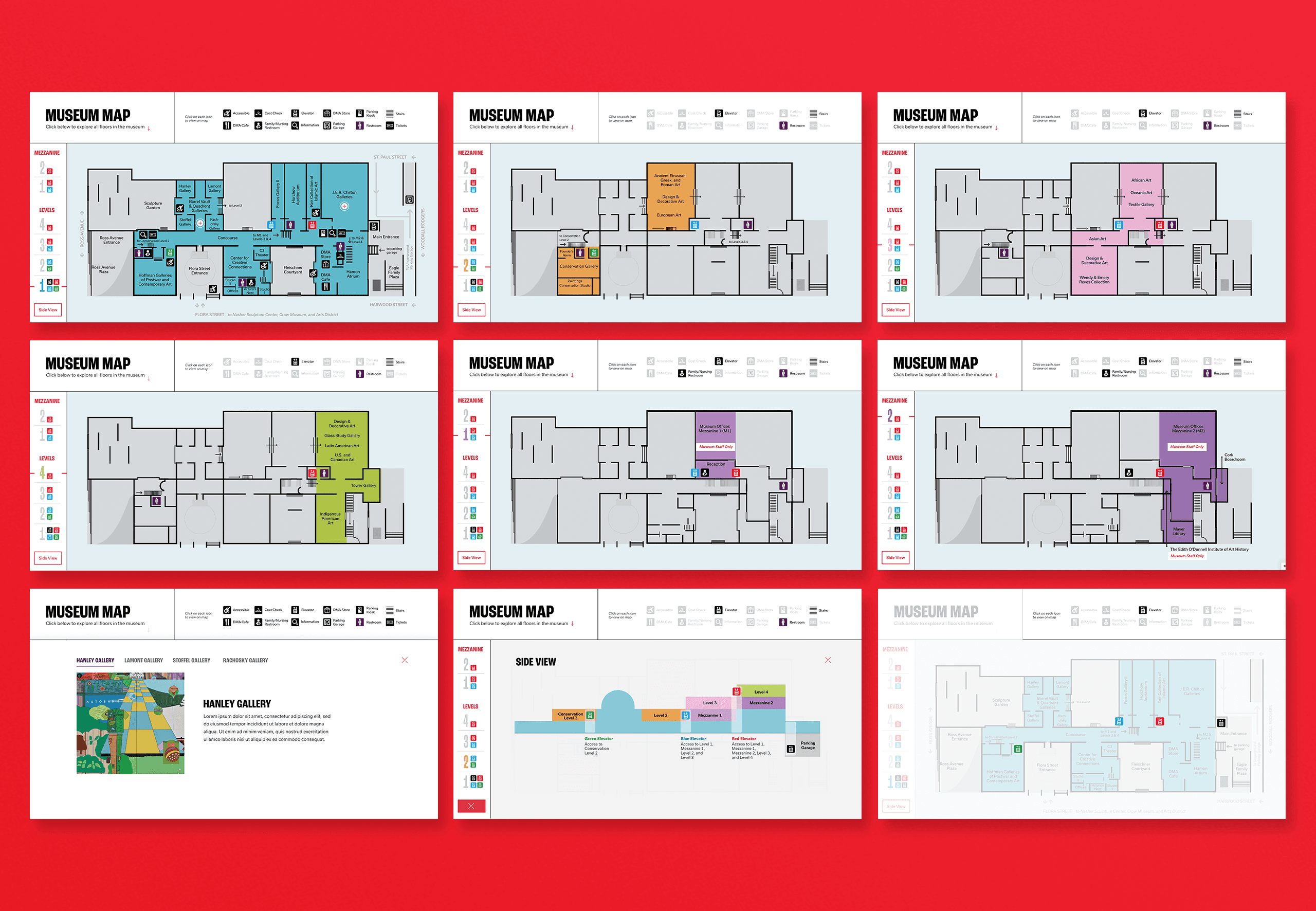
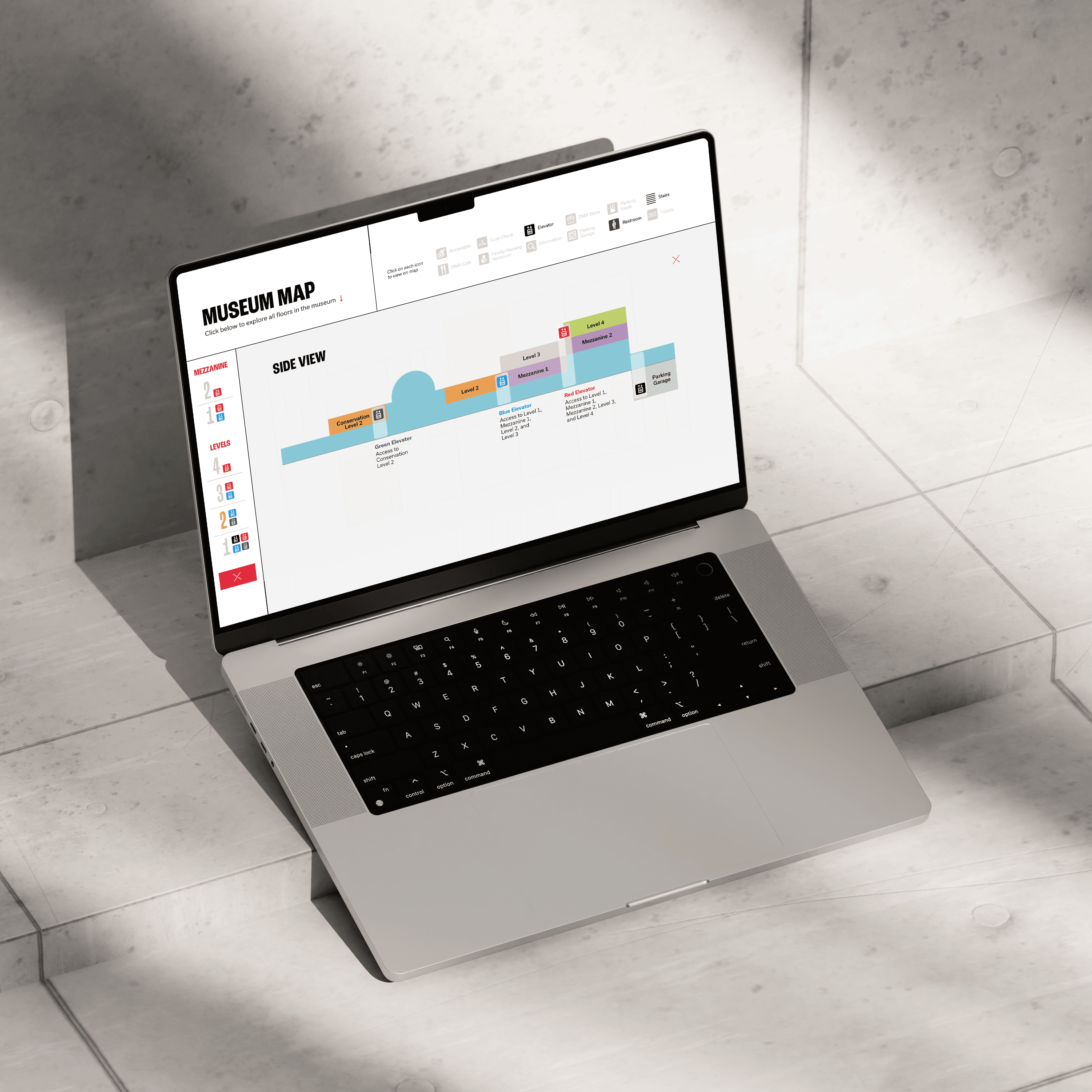
Using DMA’s original source files and existing PDF as a foundation, I redesigned the map to fit within a single viewport, which ensured the entire experience was easily viewable on mobile, the primary use-case for on-site visitors. To reduce visual and cognitive overload, floors were organized into a filter-based module, allowing users to quickly switch views and understand where exhibitions were located.
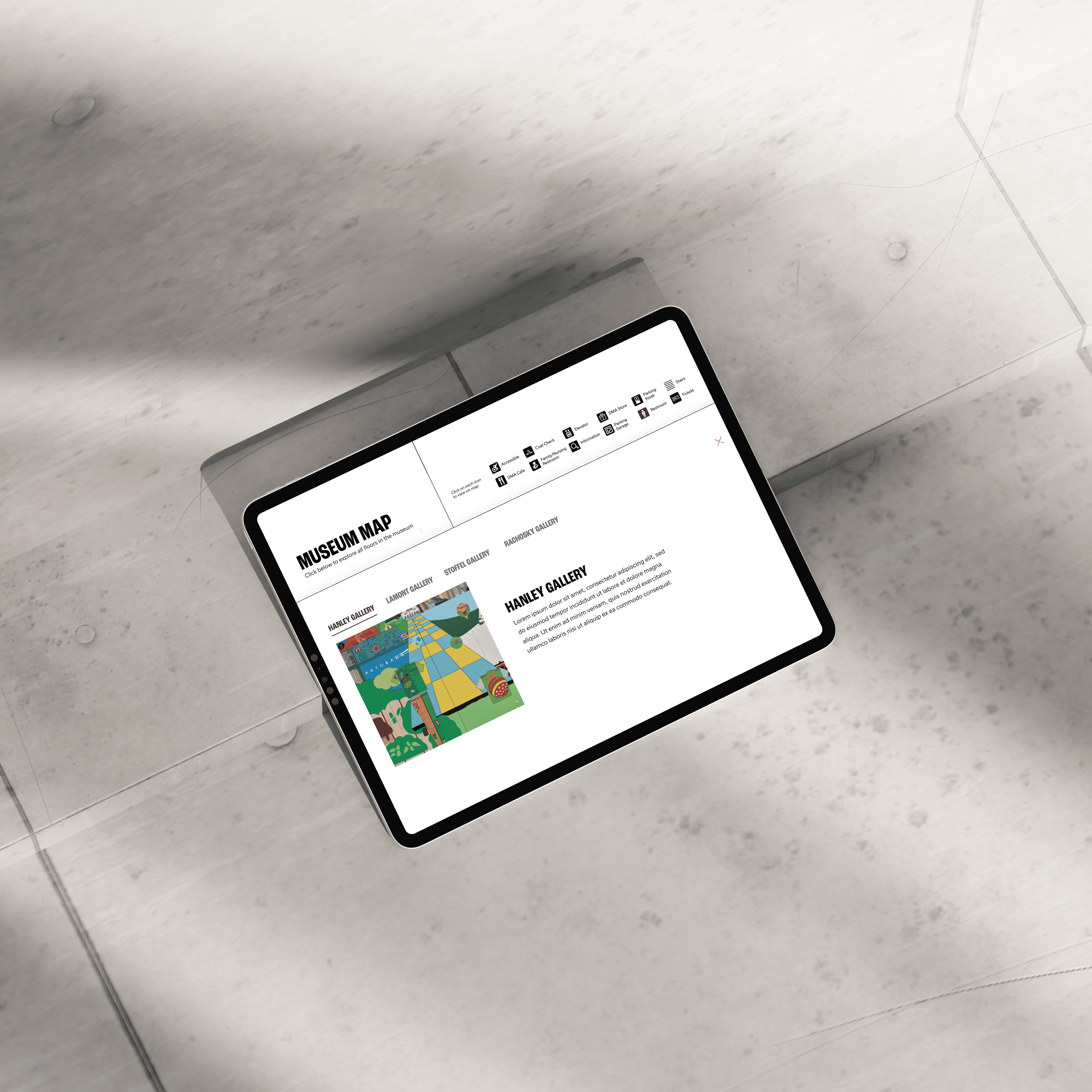
A separate filter module was introduced for museum amenities, enabling visitors to identify nearby facilities-such as restrooms or gift shops-or determine when they needed to navigate to another floor. To support deeper exploration, I also incorporated pop-up overlays for featured exhibitions, providing detailed information about the museum’s current rotation without disrupting the navigation experience.
01
02
03
04
see also